
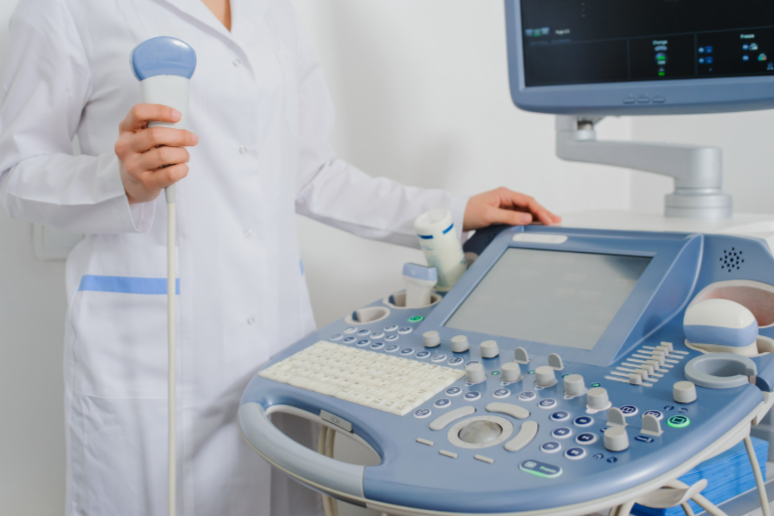
When you are dealing with heavy periods, pelvic pain, painful intercourse, irregular bleeding, an ovarian cyst, or a suspected fibroid, the right imaging can make a big difference. A gynecologic ultrasound is often one of the first tools used to look inside the pelvis without surgery or radiation. But not all ultrasound exams answer the same clinical question.
At Arcadia Women’s Wellness, when we talk about an advanced gynecologic ultrasound, we mean more than a quick look at the uterus and ovaries. We mean a detailed pelvic ultrasound performed with a clear clinical question in mind, careful measurements, attention to image quality, and review of the findings in the context of your symptoms and treatment goals.
“Ultrasound is not just about getting a picture. It is about connecting what we see on the images with what a patient is actually feeling. When a women’s health provider can review the images directly, the consultation becomes more meaningful because we can explain the why behind symptoms and match treatment options to the findings.” — Kristina Calligan, FNP
What does a gynecologic ultrasound look at?
A pelvic ultrasound may include a transabdominal ultrasound, where the probe is moved over the lower abdomen, and/or a transvaginal ultrasound, where a slender ultrasound probe is placed in the vagina to obtain closer images of the uterus and ovaries. Doppler ultrasound may also be used to evaluate blood flow.
Depending on the reason for the exam, ultrasound may evaluate the size, shape, and position of the uterus; the uterine lining; the uterine muscle where fibroids or adenomyosis may be seen; the ovaries and adnexa; the cervix; pelvic fluid; and the position of an IUD.
What makes it “advanced”?
The word advanced does not mean every patient needs every technology. It means the exam is thoughtful and targeted. For some patients, a standard transvaginal and transabdominal ultrasound is enough. For others, additional views, Doppler, 3D imaging, or saline infusion sonohysterography may be helpful.
A more detailed ultrasound can be especially useful when symptoms and basic exam findings do not match, when prior imaging was unclear, or when treatment decisions depend on location. For example, a fibroid that pushes into the uterine cavity may be treated differently than one located mostly in the uterine muscle. A possible polyp may change the conversation about hysteroscopy. An IUD that is low or embedded may explain pain or bleeding.
Symptoms and conditions ultrasound may help evaluate
Heavy periods, prolonged bleeding, irregular bleeding, or bleeding after menopause
Fibroids, endometrial polyps, adenomyosis, or thickened endometrium
Pelvic pain, painful periods, pain with intercourse, or suspected endometriosis-related findings
Ovarian cysts, adnexal masses, or follow-up of previously seen ovarian findings
IUD position, missing IUD strings, or pain/bleeding after IUD placement
Recurrent pregnancy loss, infertility evaluation, or suspected uterine shape differences
Ultrasound can provide important information, but it is not the whole diagnosis. Some conditions, including superficial endometriosis, pelvic floor dysfunction, vulvar pain syndromes, gastrointestinal causes, urinary conditions, and hormonal problems, may not be fully explained by ultrasound alone. That is why imaging needs to be interpreted alongside your history, exam, labs, and goals.
Why image review matters for treatment planning
A report is helpful, but the images often add another layer of understanding. When a provider can review the actual images, measurements, and pattern of findings, it can help guide a more useful conversation.
For heavy bleeding, ultrasound can help determine whether options like medication, hormonal therapy, an IUD, endometrial biopsy, hysteroscopy, ablation, or surgical consultation make sense. For fibroids, location matters. For ovarian cysts, appearance and size matter. For pelvic pain, ultrasound may identify findings such as endometriomas, adenomyosis, cysts, or masses, while also helping determine when MRI, specialist referral, or additional evaluation is needed.
This is also why a normal ultrasound does not mean your symptoms are not real. It may mean the next step is a different type of evaluation rather than stopping the conversation.
What should you expect during the exam?
For a transabdominal ultrasound, you may be asked to arrive with a full bladder. For a transvaginal ultrasound, you are usually asked to empty your bladder first. The transvaginal probe is smaller than a typical speculum and is covered and lubricated before insertion. You may feel pressure, especially if you already have pelvic pain, but the exam should not feel like something you have to simply tolerate.
You can ask questions, request pauses, or let the sonographer or provider know if something is painful. If you have a history of trauma, pelvic floor pain, vaginismus, or anxiety with pelvic exams, tell the team ahead of time so the visit can be approached with more planning and care.
When should you ask whether ultrasound is appropriate?
Consider an evaluation if your periods are heavier than usual, you are bleeding between periods, you have bleeding after menopause, your pelvic pain is new or worsening, sex has become painful, you have persistent bloating or pelvic pressure, or you were told you have a fibroid, polyp, cyst, or thickened uterine lining and do not understand what it means.
Urgent evaluation is important for severe one-sided pelvic pain, pain with vomiting or fainting, fever, pregnancy with pain or bleeding, or bleeding so heavy that you are soaking through pads quickly or feeling lightheaded.
The bottom line
An advanced gynecologic ultrasound can be one of the most helpful tools in women’s health because it helps connect symptoms to anatomy. It can clarify possible causes of bleeding, pain, cysts, fibroids, IUD concerns, and other pelvic symptoms. Most importantly, it can help make the next step more personalized.
At Arcadia Women’s Wellness, our goal is not just to order tests. Our goal is to help you understand what the findings mean, what they do not mean, and how they fit into a treatment plan that makes sense for your body and your life. You can schedule an appointment with Arcadia Women’s Wellness here.
Want clear, patient-friendly women’s health education in your inbox? Subscribe to our Women’s Health Library for new articles on hormones, periods, pelvic health, prevention, and wellness below.
Medical disclaimer: This article is for education only and does not replace individualized medical advice.
Sources:
RadiologyInfo.org - Patient explanation of pelvic ultrasound, transabdominal/transvaginal ultrasound, Doppler, 3D ultrasound, and common uses. https://www.radiologyinfo.org/en/info/pelvus
Johns Hopkins Medicine: Pelvic ultrasound overview, organs assessed, reasons for ultrasound, risks, and what to expect. https://www.hopkinsmedicine.org/health/treatment-tests-and-therapies/pelvic-ultrasound
AIUM Female Pelvis Practice Parameters: Quality ultrasound performance and documentation framework for female pelvis ultrasound. https://www.aium.org/resources/practice-parameters/female-pelvis
ACR Appropriateness Criteria: Abnormal Uterine Bleeding: Supports ultrasound as an initial imaging test in abnormal uterine bleeding evaluation. https://pubmed.ncbi.nlm.nih.gov/33153547/
ACOG Clinical Practice Guideline: Diagnosis of Endometriosis: Supports transvaginal ultrasound as initial imaging in suspected endometriosis, with clinical correlation. https://journals.lww.com/greenjournal/fulltext/10.1097/aog.0000000000006181
SRU Consensus Update: Simple Adnexal Cysts: Supports avoiding unnecessary follow-up for well-characterized simple cysts and using follow-up when characterization is incomplete. https://pubs.rsna.org/doi/abs/10.1148/radiol.2019191354