
Fibroids are common, but symptoms should not be dismissed.
Fibroids are one of the most common gynecologic conditions, but many women do not realize they have them until symptoms start affecting daily life. Some cause no symptoms. Others can lead to heavy bleeding, pelvic pressure, painful periods, bladder symptoms, constipation, pain with sex, or fertility concerns.
Fibroids are usually benign, meaning noncancerous, and there are many treatment options. The best plan depends on symptoms, age, medical history, pregnancy goals, and the size and location of the fibroids.
What are fibroids?
Fibroids, also called leiomyomas or myomas, are growths made of smooth muscle and connective tissue that develop in or around the uterus. They can be very small, or they can grow large enough to change the size and shape of the uterus.
Fibroids are influenced by hormones, especially estrogen and progesterone. They are most common during the reproductive years and may shrink after menopause, although not always. Having fibroids does not automatically mean you need treatment. Treatment is usually considered when fibroids cause symptoms, anemia, pain, infertility concerns, or quality-of-life changes.
What symptoms can fibroids cause?
Fibroid symptoms vary because fibroids can grow in different parts of the uterus. A small fibroid near the uterine lining may cause heavy bleeding, while a larger fibroid growing outward may cause more pressure than bleeding. Common symptoms include:
Heavy or prolonged periods
Passing large blood clots
Bleeding between periods
Pelvic pressure, bloating, or fullness
Painful periods or pelvic pain
Pain with sex
Frequent urination or trouble fully emptying the bladder
Constipation or rectal pressure
Low back discomfort
Trouble getting pregnant or recurrent pregnancy loss in some cases
When should someone be evaluated?
Schedule an evaluation if bleeding or pelvic symptoms are changing, affecting daily life, or making you feel worried. Heavy periods are common, but they should not be brushed off when they interfere with work, exercise, travel, sex, sleep, or energy.
Consider being seen if you soak through a pad or tampon every 1 to 2 hours, bleed longer than 7 days, pass large clots, feel pelvic pressure, develop new urinary frequency or constipation, have pain that limits normal activities, or have symptoms of anemia such as fatigue, dizziness, headaches, shortness of breath, or feeling unusually weak. Bleeding after menopause should always be evaluated.
How are fibroids diagnosed?
Diagnosis starts with a conversation about periods, bleeding pattern, pain, pelvic pressure, pregnancy goals, medical history, medications, and family history. A pelvic exam may identify an enlarged or irregular uterus, but imaging is often needed to understand what is happening.
Pelvic ultrasound is usually the first imaging test. A transvaginal ultrasound can provide a closer view of the uterus and ovaries. A saline infusion sonogram can better show whether a fibroid or polyp distorts the uterine cavity. MRI may be useful when detailed mapping is needed or ultrasound findings are unclear.
Bloodwork may check for anemia, iron deficiency, thyroid concerns, pregnancy, or other causes of abnormal bleeding. Depending on age, bleeding pattern, and risk factors, an endometrial biopsy may be considered to evaluate the uterine lining.
Why does fibroid location matter?
Fibroids are often described by where they sit in relation to the uterine lining, the uterine muscle wall, and the outside surface of the uterus. The FIGO fibroid classification system uses numbers 0 through 8 to describe location.
Location affects symptoms and treatment options. Fibroids close to or inside the uterine cavity are more likely to cause heavy bleeding and may be more relevant for fertility. Fibroids growing outward may cause pressure, bladder symptoms, bowel symptoms, or pelvic fullness.
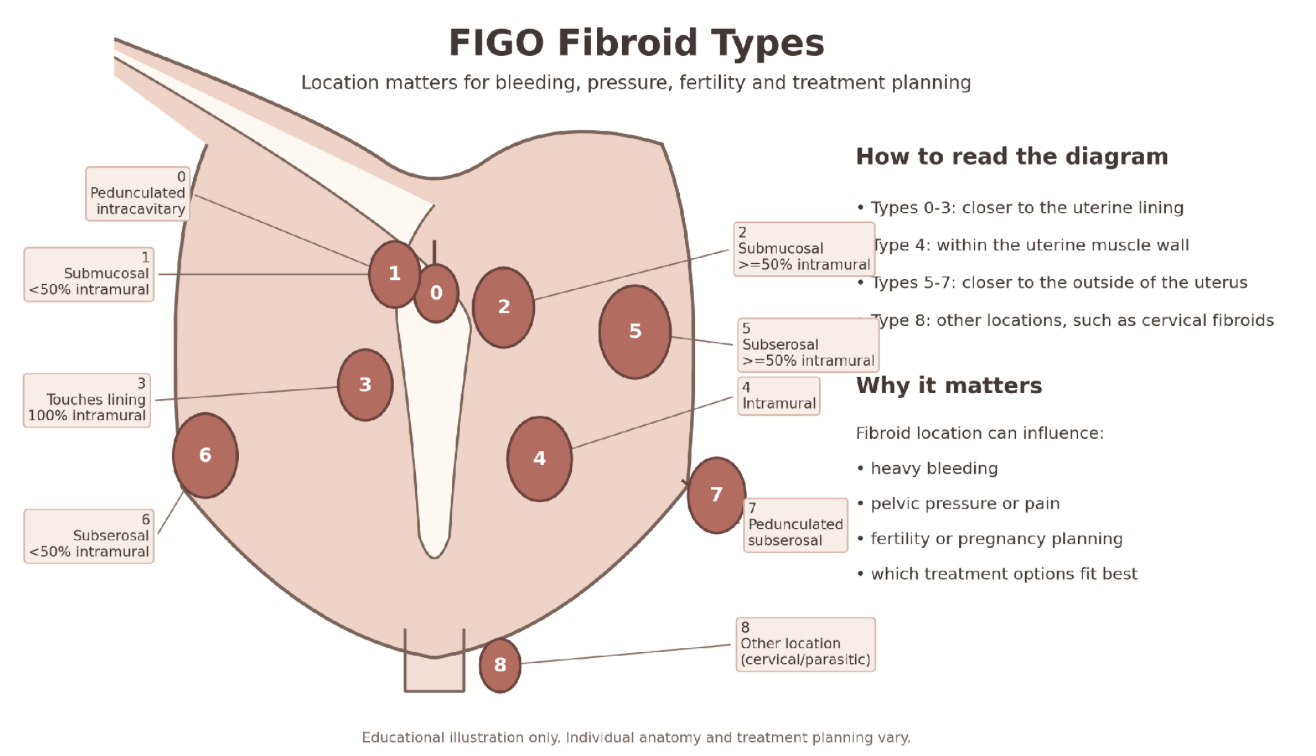
Quick guide to FIGO fibroid types
The FIGO system is helpful shorthand, but it is not the whole story. Size, number of fibroids, symptoms, fertility goals, and overall health also matter.
Type 0: entirely within the uterine cavity and attached by a stalk
Type 1: mostly in the cavity, with less than 50% in the uterine wall
Type 2: partly in the cavity, with 50% or more in the uterine wall
Type 3: touches the uterine lining but is completely within the uterine wall
Type 4: completely within the uterine wall
Type 5: mostly within the uterine wall but bulges outward
Type 6: mostly outside the uterus with some attachment to the wall
Type 7: attached to the outside of the uterus by a stalk
Type 8: other locations, such as cervical or parasitic fibroids
What are the treatment options?
Treatment is individualized. If fibroids are small and not causing symptoms, monitoring may be reasonable. If bleeding is the main concern, medication may help. Options can include anti-inflammatory medications for cramps, tranexamic acid for heavy bleeding in selected patients, hormonal birth control, progestin-only options, a levonorgestrel IUD in selected patients, or medications that temporarily lower ovarian hormone stimulation.
If symptoms are more significant, procedure-based treatment may be considered. Options may include hysteroscopic myomectomy for fibroids inside the cavity, laparoscopic or abdominal myomectomy for patients who want to preserve the uterus, uterine artery embolization, radiofrequency ablation, or hysterectomy for patients who want definitive treatment and do not desire future pregnancy.
Endometrial ablation may help some patients with heavy bleeding, but it does not treat all fibroid types and is not appropriate for patients who desire future pregnancy. This is why careful imaging and counseling are so important before choosing a treatment.
The bottom line
Fibroids are common, but suffering through heavy bleeding, pelvic pressure, or pain should not be considered normal. Understanding the size, number, and location of fibroids is one of the most important steps in building the right treatment plan.
At Arcadia Women's Wellness, we help women understand symptoms, review imaging carefully, and discuss treatment options based on goals, lifestyle, and stage of life. If you are dealing with heavy periods, pelvic pressure, or fibroid concerns, we encourage you to schedule a visit with Arcadia Women’s Wellness here.
Want clear women's health education? Join the Arcadia Women's Health Library for practical guidance on hormones, periods, pelvic health, menopause, prevention, and personalized wellness.
Medical disclaimer: This article is for education only and does not replace individualized medical advice.
Sources:
Merck Manual Professional: Uterine Fibroids - https://www.merckmanuals.com/professional/gynecology-and-obstetrics/uterine-fibroids/uterine-fibroids
ACOG Practice Bulletin: Management of Symptomatic Uterine Leiomyomas - https://www.acog.org/clinical/clinical-guidance/practice-bulletin/articles/2021/06/management-of-symptomatic-uterine-leiomyomas
NCBI Bookshelf / StatPearls FIGO Leiomyoma Subclassification System - https://www.ncbi.nlm.nih.gov/books/NBK574504/figure/article-139270.image.f5/
FIGO Best Practice Guidance: Medical Treatment of Fibroids - https://obgyn.onlinelibrary.wiley.com/doi/10.1002/ijgo.70497
AAFP: Uterine Fibroids Diagnosis and Treatment - https://www.aafp.org/afp/2017/0115/p100