
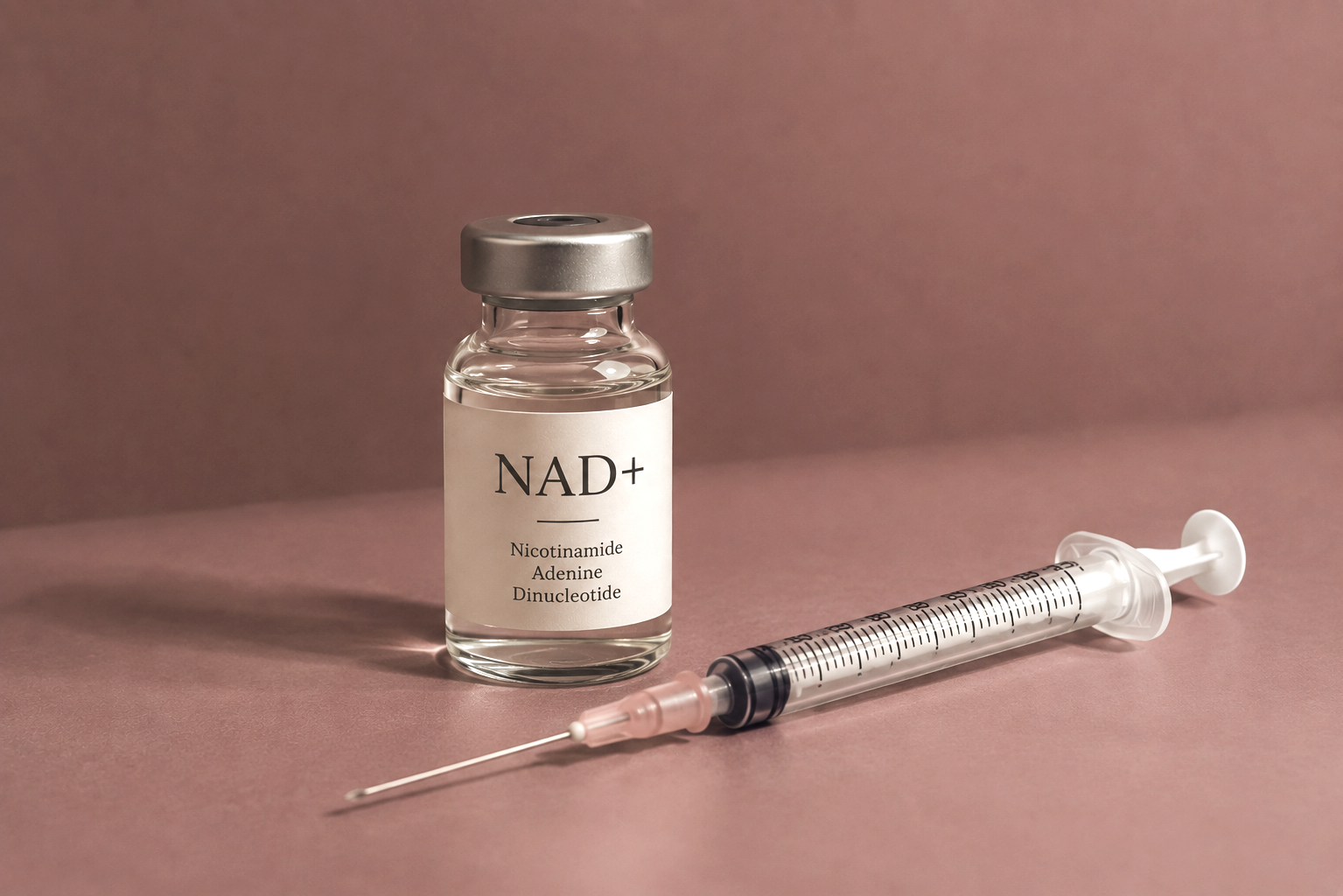
At Arcadia Women's Wellness, our approach is simple: NAD+ is biologically important, and it may be a helpful tool for select patients, but it should be discussed with realistic expectations and thoughtful screening.
Energy. Brain fog. Recovery. Healthy aging. NAD+ injections have become one of the most talked-about wellness treatments, especially in longevity and biohacking spaces. But like many wellness trends, the marketing can move faster than the science.
What is NAD+?
NAD+ stands for nicotinamide adenine dinucleotide. It is a coenzyme found in every cell of the body. A coenzyme helps enzymes do their jobs. NAD+ is involved in cellular energy production, mitochondrial function, DNA repair, inflammation signaling, and the way cells respond to stress.
One reason NAD+ has received so much attention is that NAD+ availability appears to change with aging, illness, alcohol use, sleep disruption, metabolic dysfunction, and inflammation. Because NAD+ is tied to how cells make and use energy, researchers are studying whether supporting NAD+ pathways could influence healthspan, metabolism, recovery, and age-related conditions.
That does not mean NAD+ is a magic energy shot. Fatigue in midlife can come from many causes, including poor sleep, perimenopause or menopause symptoms, thyroid disease, anemia, low iron, low B12, insulin resistance, depression, anxiety, medications, chronic stress, alcohol, under-fueling, or overtraining. Before treating fatigue as a "cellular energy" issue, it is important to understand the bigger picture.
What are NAD+ injections?
NAD+ can be discussed in several forms. Some products contain NAD+ itself and are given by injection or IV infusion. Other products are oral precursors, such as nicotinamide riboside (NR) or nicotinamide mononucleotide (NMN), which the body can use to make NAD+.
These are not the same thing. Oral precursors have more human research than injectable NAD+ for general wellness, but even that research is still evolving. NAD+ injections and IV infusions are often offered through wellness clinics, usually as compounded products. That means quality, sourcing, sterility, and dosing practices matter.
What does the evidence say about energy and aging?
The strongest part of the NAD+ story is the biology. NAD+ clearly plays an important role in energy metabolism and cellular repair. Animal and laboratory studies are promising and have helped researchers understand why NAD+ pathways matter.
The human outcome data are much more limited. Some human studies show that NAD+ precursors can raise NAD-related metabolites in the blood. A small randomized trial in postmenopausal women with prediabetes found that oral NMN improved muscle insulin sensitivity, but this was not a trial of NAD+ injections, and it does not prove that NAD+ injections improve energy, reverse aging, or extend lifespan.
A helpful way to explain the evidence is this: raising NAD+ activity is measurable; proving meaningful anti-aging benefits in healthy humans is much harder. Current reviews conclude that NAD+ augmentation has biological activity, but clinical benefits for broad anti-aging and wellness outcomes remain inconclusive. Larger, longer, and better-designed human trials are still needed.
What symptoms do people hope NAD+ will help?
Patients often ask about NAD+ for fatigue, brain fog, motivation, exercise recovery, alcohol recovery, inflammation, and longevity. Some people report feeling better after treatment. Others notice little difference. At this point, many of the reported benefits are subjective and may vary based on baseline health, sleep, nutrition, hormones, stress, medications, and expectations.
This does not make the treatment meaningless, but it does mean NAD+ should be presented as a supportive wellness therapy, not a cure or guaranteed anti-aging intervention.
Safety matters: not all NAD+ products are equal
Because NAD+ injections enter the body directly, sterility and ingredient quality are critical. The FDA has specifically warned compounders not to use food-grade NAD+ ingredients to make sterile injectable products because of contamination concerns. The FDA has also received adverse event reports after NAD+ injectable drugs, including severe chills, shaking, vomiting, and fatigue, consistent with excessive endotoxin exposure.
Possible side effects of NAD+ therapy may include nausea, headache, flushing, lightheadedness, stomach upset, muscle cramps, injection-site irritation, or feeling unwell during or after treatment. IV therapy also carries risks related to vein irritation, infection, or infusion reactions. Severe reactions are uncommon but should be taken seriously.
Who should be extra cautious?
NAD+ therapy may not be appropriate for everyone. A more careful discussion is especially important for patients who are pregnant or breastfeeding, have active cancer or a history of cancer, are receiving chemotherapy or radiation, have advanced liver disease, have significant kidney disease, have complex autoimmune or inflammatory conditions, or are considering frequent or long-term high-dose treatment.
The cancer conversation is nuanced. NAD+ supports normal cellular repair and energy metabolism, but cancer cells also use energy and repair pathways to grow and survive. This does not prove NAD+ causes cancer, but it is a reason to be cautious and individualized, especially in patients with active cancer or recent cancer treatment.
Questions to ask before NAD+ injections
Before starting NAD+ injections, patients should ask: What is my goal? Are there medical reasons for my fatigue or brain fog that should be evaluated first? Where is the product sourced? Is it prepared by a reputable pharmacy using sterile standards? What dose is being used? How often is treatment recommended? What side effects should I watch for? How will we decide whether it is helping?
The Arcadia approach
At Arcadia Women's Wellness, we believe wellness care should be evidence-informed, not hype-driven. NAD+ may be part of a personalized wellness conversation, but it should not replace the foundations that consistently support energy and healthy aging: sleep, resistance training, protein intake, metabolic health, hormone evaluation when appropriate, alcohol moderation, stress management, and preventive care.
If you are curious about NAD+ injections, our goal is to help you understand what is known, what is still uncertain, and whether it fits your health history and goals. You can schedule an appointment with Arcadia Women’s Wellness here.
Medical disclaimer: This article is for education only and does not replace individualized medical advice.
Sources:
FDA - Sterile compounding and NAD+ injectable concerns: https://www.fda.gov/drugs/human-drug-compounding/fda-reminds-compounders-use-ingredients-suitable-sterile-compounding
FDA - GenoGenix LLC warning letter, sterile compounding concerns and NAD+ endotoxin report: https://www.fda.gov/inspections-compliance-enforcement-and-criminal-investigations/warning-letters/genogenix-llc-718739-01202026
Gallagher C, Emmanuel OO. NAD+ supplementation for anti-aging and wellness. Ageing Research Reviews. 2026.: https://pubmed.ncbi.nlm.nih.gov/41655607/
Freeberg KA, et al. Dietary Supplementation With NAD+-Boosting Compounds in Humans. 2023.: https://pmc.ncbi.nlm.nih.gov/articles/PMC10692436/
Yoshino M, et al. Nicotinamide mononucleotide increases muscle insulin sensitivity in prediabetic women. Science. 2021.: https://pubmed.ncbi.nlm.nih.gov/33888596/
Cleveland Clinic - NAD+ Supplements: Benefits and Risks: https://health.clevelandclinic.org/nad-supplement